UDita: Universal Design is the Answer
After meeting Harshvardhan Dubey & Gopika Anand on the first Walk for Arcause from Kolkata to Delhi, Gita Balakrishnan realised the complete lack of inclusivity in the way we design our buildings and spaces, highlighting an immediate need for empathy surrounding Universal Design and Inclusivity. This realisation laid the foundation for UDita, which aims to drive change through empathy and understanding. The goals of UDita are multifaceted, aiming to foster innovation, education, and awareness surrounding Universal Design principles.
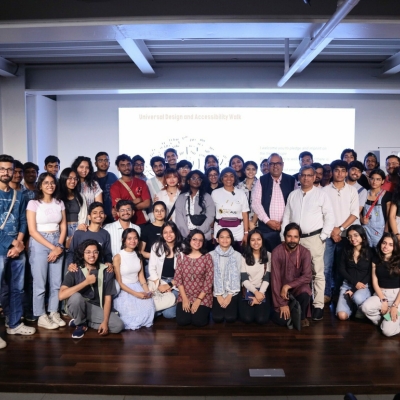
In the Ideation phase, the project seeks to incentivize and recognise endeavors that champion inclusivity and accessibility within educational and professional realms through initiatives such as the Design Educators Awards, Arcause UDita Thesis Gold Medal, and UDita Grants for Barrier-free Design. Educationally, UDita aims to equip the next generation with the knowledge and skills necessary to integrate Universal Design principles into their respective fields through presentations to school students, self-paced learning content, collaborative studios with colleges, and faculty development programs. Lastly, in the Awareness phase, the project endeavors to raise widespread awareness and foster dialogue on Universal Design and Inclusion through initiatives like the Universal Design and Accessibility Walk for Arcause 4.0 and engagement with diverse stakeholders, ultimately inspiring collective action towards a more accessible and inclusive society.
A Teacher’s Guide On UD
Explore The Free Self-Paced Course For All The Pedagogues!
UD For The Built Environment
Explore The Free Self-Paced Course On Universal Design
Project Report
Read The Full Report On UDita, For The Year 2023
Fellows 2023
Explore About The UDita Fellows, For The Year 2023
Recent Events
APNA Arcause Purple Walk Goa 100
Universal Design is often addressed as a technical mandate, but it is fundamentally a question of equity. When public spaces, institutions, and everyday environments are designed without considering accessibility, large sections of society, persons with disabilities, the elderly, pregnant women, children, and even those temporarily disabled, are systematically excluded.
The APNA Arcause Purple Walk Goa 100 is a 100 km initiative designed to position accessibility at the centre of public and professional discourse. Anchored in Goa, a state defined by its beaches, heritage precincts, and tourism-led economy, the walk interrogates whether our built environment serves everyone equally. Along the way, participants engage directly with Goa’s layered landscape, its coastal stretches, bustling markets, serene village paths, and historic churches and precincts, experiencing firsthand how natural terrains and cultural heritage sites respond to questions of inclusion.
Led by architect Gita Balakrishnan, founder of Ethos Foundation, and APNA, the walk becomes a platform to examine, experience, and address barriers that often remain invisible until one is directly confronted by them. It reframes Universal Design not only as a professional responsibility but as a collective journey through nature, heritage, and everyday life, asking how we might reimagine these environments to truly serve all.
A core focus area of Arcause is to mainstream Universal Design as a principle that shapes everyday environments, ensuring equity and inclusion in public life. With this intent, Arcause is seeking to collaborate with the Rainmatter Foundation, Indian Institute of Architects, Goa Chapter (IIA), Council of Architecture (COA), Indian Institute of Interior Designers (IIID), and the Goa College of Architecture (GCA).
Global Autism Convention 2026
On 23rd January 2026, Ethos Foundation participated in the Global Autism Convention 2026 at St. John’s Medical College, Bengaluru, engaging with a diverse and interdisciplinary audience comprising doctors, therapists, psychiatrists, educators, caregivers, and students. Ethos was present at the convention for the entire day with a dedicated interactive booth, designed as a space for dialogue, learning, and exchange around universal design and autism-inclusive environments.
An Interactive Booth as a Learning Space
Rather than a static exhibition, the Ethos booth functioned as a participatory learning zone. A series of hands-on activities and prompts were curated to initiate conversations around:
- Universal Design principles
- Sensory sensitivities and spatial experience
- Autism-friendly public and institutional environments
- Everyday architectural barriers that often go unnoticed
These activities encouraged visitors to reflect on how spatial design impacts neurodivergent individuals and how small, intentional design decisions can create significantly more inclusive environments. The booth saw consistent engagement throughout the day, with professionals from medical and therapeutic backgrounds sharing lived experiences, clinical insights, and on-ground challenges that architecture and design can respond to.
Survey on Autism-Friendly Spaces
As part of this engagement, Ethos Foundation conducted a short survey aimed at understanding:
- Awareness levels around autism-friendly and sensory-sensitive spaces
- How professionals currently perceive the role of built environments in autism care
- Gaps between medical understanding and architectural implementation
The responses collected will directly inform future Ethos-led research, awareness programs, design guidelines, and collaborations, helping shape initiatives that are grounded in real-world knowledge and interdisciplinary feedback rather than assumptions.
Student Volunteers: Learning Through Exchange
A key highlight of Ethos’ presence was the involvement of 10 architecture student volunteers, who played an active role in facilitating activities, interacting with visitors, and documenting insights. The students became part of conversations with doctors, therapists, and mental health professionals, gaining exposure to:
- Sensory processing differences
- Behavioural patterns and environmental triggers
- The limitations of conventional architectural thinking when applied to neurodivergent users
This exchange proved to be a powerful learning experience, reinforcing the importance of cross-disciplinary dialogue in shaping truly inclusive design education and practice.
Symposium Presentation by Ar. Gita Balakrishnan
Ethos Foundation’s work was further represented at the symposium through a presentation by Ar. Gita Balakrishnan, titled:
“Designing Sensory-Friendly Public Spaces for Autism Inclusion.”
The session explored the role of architecture and public space design in supporting neurodivergent users, highlighting:
- Sensory overload in public environments
- Design strategies for reducing anxiety and disorientation
- The need for empathy-driven, evidence-based design approaches
The presentation sparked active interest, with many attendees engaging with the Ethos booth and activities immediately after the session, bridging theory, research, and hands-on exploration.
Elective – UDita Workshop
The workshop is envisioned as a practice-led learning module that exposes architecture students to Universal Design, Accessibility, and Inclusive Practice through direct engagement with experts, institutions, and lived realities. The elective balances sensitisation, skill-building and applied workshops, ensuring students move from awareness to action. The elective travels across colleges to expose students to multiple institutional cultures and to understand accessibility.
The Travelling Elective successfully completed its first chapter in Bengaluru in 2026.
Building on the insights and experiences gained there, the initiative now continues its journey to explore new cities, cultures, and learning opportunities through immersive, place-based education.
Arcause Spotlight 1.0
Arcause Spotlight 1.0 | Delhi Edition (IDEAS – Inclusive Divyangjan Entrepreneur Association):
As part of Arcause Spotlight 1.0 | Delhi Edition, IDEA conducted an immersive accessibility audit session that encouraged participants to engage with accessibility beyond compliance and regulations, approaching it instead as a critical design responsibility.
The activity began with a pre-engagement exercise, where participants received curated resource material and were assigned different disability perspectives to study prior to the session. This preparatory exercise helped establish a foundational understanding of diverse user experiences and accessibility challenges.
The session commenced at the Office of the Chief Commissioner for Persons with Disabilities (CCPD), where participants were introduced to the principles of inclusive design through discussions on the Rights of Persons with Disabilities (RPwD) Act, accessibility frameworks, and the physical, sensory, and systemic barriers that shape everyday experiences. Participants were also introduced to IDEA’s Self-Assessment Accessibility Tool and its application within real urban environments.
Building on this foundation, participants undertook on-ground accessibility audits in small groups, evaluating selected public spaces through the lens of different disabilities. The exercise encouraged observation, critical analysis, and a deeper understanding of how design decisions impact inclusivity and access.
The session concluded with a collective reflection, where participants shared their findings, identified key accessibility gaps, discussed potential design interventions, and explored broader policy implications. Through dialogue and collaborative learning, the activity highlighted the importance of embedding accessibility into design processes from the outset.
By combining sensitisation, field-based assessment, and reflection, the session aimed to move participants from awareness to empathy, and from empathy to informed action, fostering a stronger commitment to creating more inclusive and equitable built environments.
Arcause Spotlight 1.0 | Delhi Edition (Samarthyam APNA):
The workshop, facilitated by Samarthyam APNA as part of Arcause Spotlight 1.0 | Delhi Edition to conduct a participatory
Accessibility Audit and Use of the SAM Metric and Rating in India Habitat
Centre under the Arcause Spotlight event. The exercise brought together
architecture students, practitioners, and persons with disabilities to jointly
assess accessibility, usability, and inclusiveness of a frequently used public
Building.
The workshop highlighted:
- Promote experiential learning and awareness on Universal Design
- Build professional and institutional capacity
- Strengthen collaboration between technical stakeholders and users
- Generate evidence-based recommendations aligned with the Rights of
Persons with Disabilities Act, 2016 and the Accessible India Campaign
This initiative supports inclusive and sustainable urban development in line with
with national and global accessibility commitments.
Methodology:
The workshop adopted a participatory, experiential, and user-led
approach, combining technical tools and lived experiences.
Key methods:
- Orientation Session: Introduction to Universal Design, accessibility
standards, and the SAM Metric and Rating
- Participatory Audit: Mixed groups of participants (including persons
with disabilities) will assess accessibility
- Checklist-based Evaluation: Use of SAM indicators and structured audit
formats
- Observation and Documentation: Photographs, measurements, and
user journey mapping
- Barrier Identification: Physical, sensory, digital, and attitudinal barriers
- Rating and Scoring: Assessment of accessibility levels
- Reflection and Discussion: Consolidation of findings and
recommendations
Arcause Spotlight 3.0
The Accessibility and Inclusive Design Activity conducted as part of Arcause Spotlight 3.0 – Bengaluru emerged as an engaging and successful component of the overall event. The activity brought together participants from diverse academic and professional backgrounds, including architecture and design students, architects, researchers, educators, and professionals from different industries. The interdisciplinary nature of participation became one of the strongest aspects of the event, as it enabled conversations and observations from multiple perspectives rather than from a singular disciplinary lens.
The process of walking through spaces, documenting observations, sketching, discussing barriers, and assessing inclusivity created a much more embodied understanding of accessibility.
Participants began engaging with accessibility not only as a compliance issue, but as something connected to dignity, comfort, autonomy, safety, and emotional experience within public spaces.
A particularly important takeaway was that many participants realised how inaccessible spaces often become through seemingly “small” design decisions like:
- unclear signage
- abrupt level changes
- inconsistent tactile systems
- inaccessible seating arrangements
- lack of resting points
- confusing circulation systems
- poor sensory comfort
The comparison between different public environments also strengthened participant understanding of how accessibility varies depending on spatial typology, management, maintenance, and institutional intent.
The event demonstrated that participants are actively seeking more grounded and meaningful engagements with the city that combine research, documentation, discussion, and lived experience.
The activity also demonstrated strong potential for being expanded into a larger recurring initiative focused on:
- accessibility documentation
- inclusive urbanism
- public space mapping
- participatory city audits
- experiential learning frameworks
The response to the session indicates that there is a strong scope for future Arcause Spotlight activities that continue to combine city engagement, critical observation, collaborative learning, and public conversations around urban issues.
Designing for Everyone: Universal Design Beyond Ramps and Railings
This playlist, “Universal Design for the Built Environment: Beyond Ramps and Railings,” offers you essential insights into Universal Design Principles. It’s not just about meeting regulations—it’s about creating spaces that work for everyone. Tailored for students, educators, architects, and professionals in the architecture, construction, engineering, and design fields, these videos help you deepen your understanding of designing spaces that are accessible and equitable for all.
Competitions, Scholarships and Grants offered to Students, Faculty and Professionals to ideate inclusive design solutions
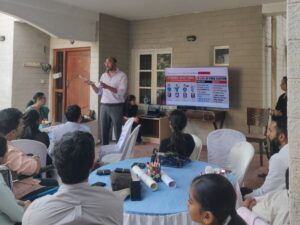
Online Courses and Skill Development Programs hosted for Faculty and Students of Architecture
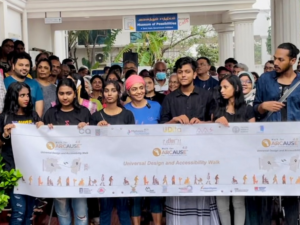
Through the Walk for Arcause 4.0 we connected with more than 10000+ people at the grassroots and over 240+ persons with disabilities
Project Education
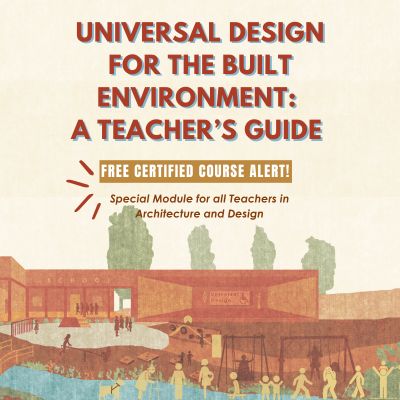
Universal Design for the Built Environment: A Teacher’s Guide
Free Course I 2024
The course is ideal for educators, and professionals within the ACED community, providing valuable insights for educators to guide learners at all levels in applying Universal Design to their design and research endeavours. Join us now, and play a pivotal role in driving accessibility as a leading principle for an inclusive built environment!
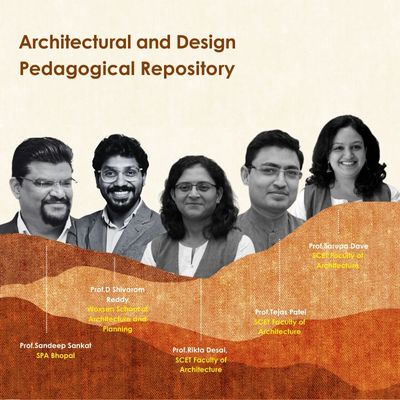
Architectural and Design Pedagogical Repository
2024
8 Videos
We bring to you a video repository of pedagogical approaches in architecture and design, that can be referred to openly on YouTube and our website. You can also contribute by nominating yourself or by connecting us with any faculty or practitioner who has surpassed conventional teaching standards and changed the course of architectural pedagogy in your opinion!
Universal Design for the Built Environment: Beyond Ramps and Railings
Free Course I 2023
99 Lessons I 8.5 hours
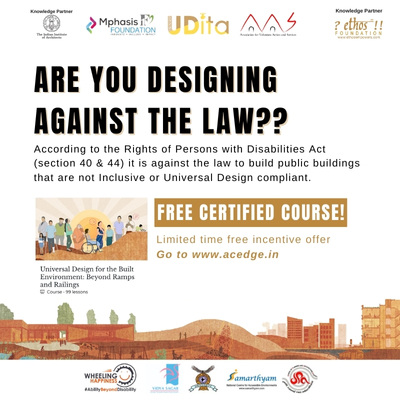
Are you designing against the law? According to the Rights of Persons with Disability Act (2016) (Section 44), it is now against the law to build public buildings that are not inclusive or Universal Design compliant. But fear not – Project UDita’s self-paced online course on ‘Universal Design for the Built Environment: Beyond Ramps and Railings’ has got you covered! Tailored for students, teachers, architects, and professionals in the ACED community, this course dives deep into the legal landscape while equipping you with practical insights into Universal Design Principles. Don’t miss your chance to design for inclusivity.
Project Ideation
Design Educators Award
2023
Winners
Colleges
Teachers
The Design Educators Awards, under Project UDita by Mphasis and AVAS, recognise and celebrate faculty members who champion Universal Design in education. This program highlights educators who inspire students to embrace accessibility and inclusivity in their design practices, fostering a new generation of professionals who prioritize functional, safe, and accessible environments. By acknowledging innovative teaching approaches, the awards aim to mainstream Universal Design and build a community of educators committed to creating universally accessible spaces.

Arcause UDita Thesis Gold Medal
2023
Winners
Colleges
Students
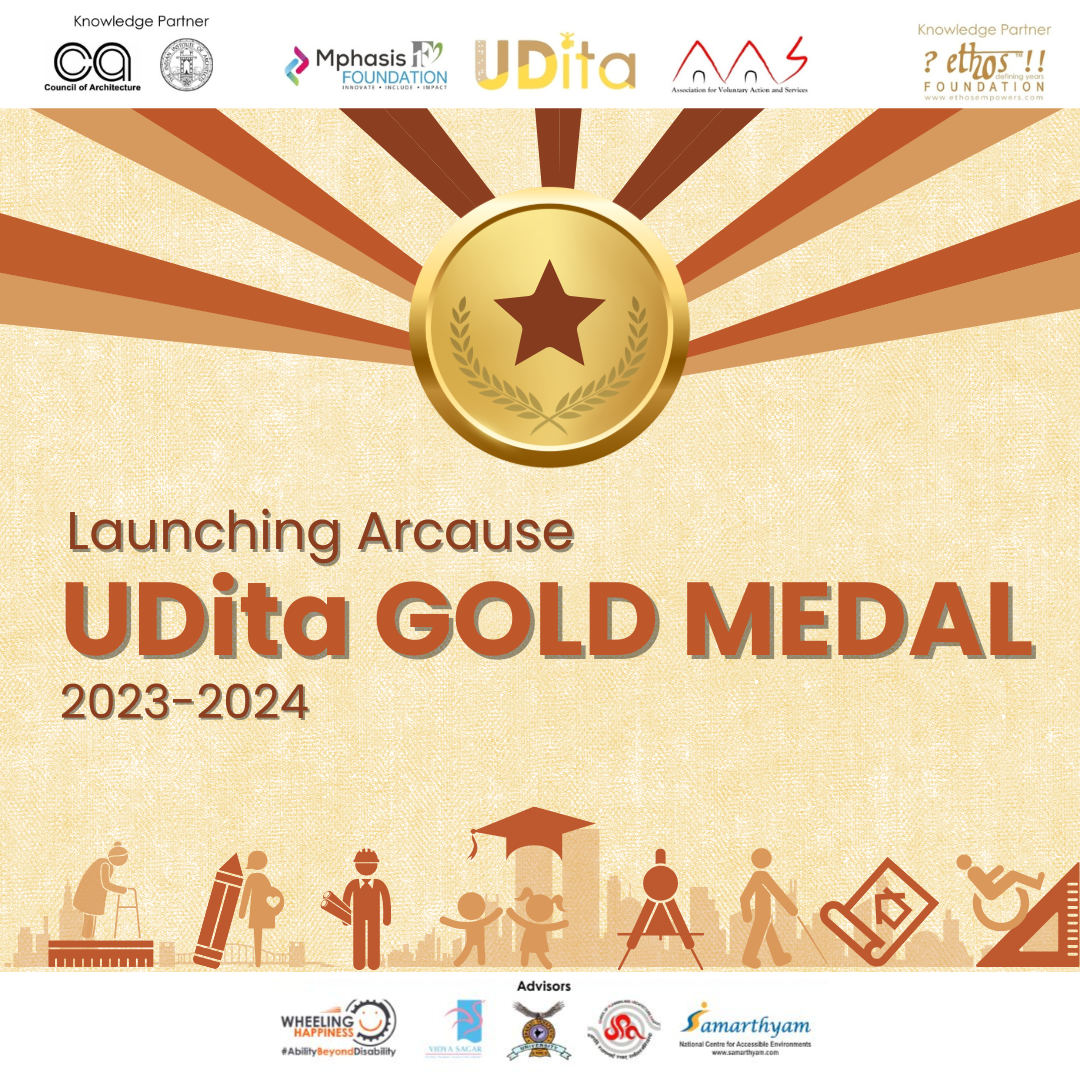
The Arcause UDita Gold Medal, under Project UDita by Mphasis F1 Foundation and AVAS, with Ethos Foundation as the knowledge partner, promotes Universal Design by encouraging its integration into student thesis projects. This award aims to break barriers, inspire change, and recognize designs that create inclusive, accessible environments for all. By focusing on the 7 principles of Universal Design, Equitable Use, Flexibility, Simplicity, Perceptibility, Tolerance for Error, Low Effort, and Space for Use. It supports innovative concepts that cater to people of all ages, abilities, and backgrounds, ensuring a more inclusive future.
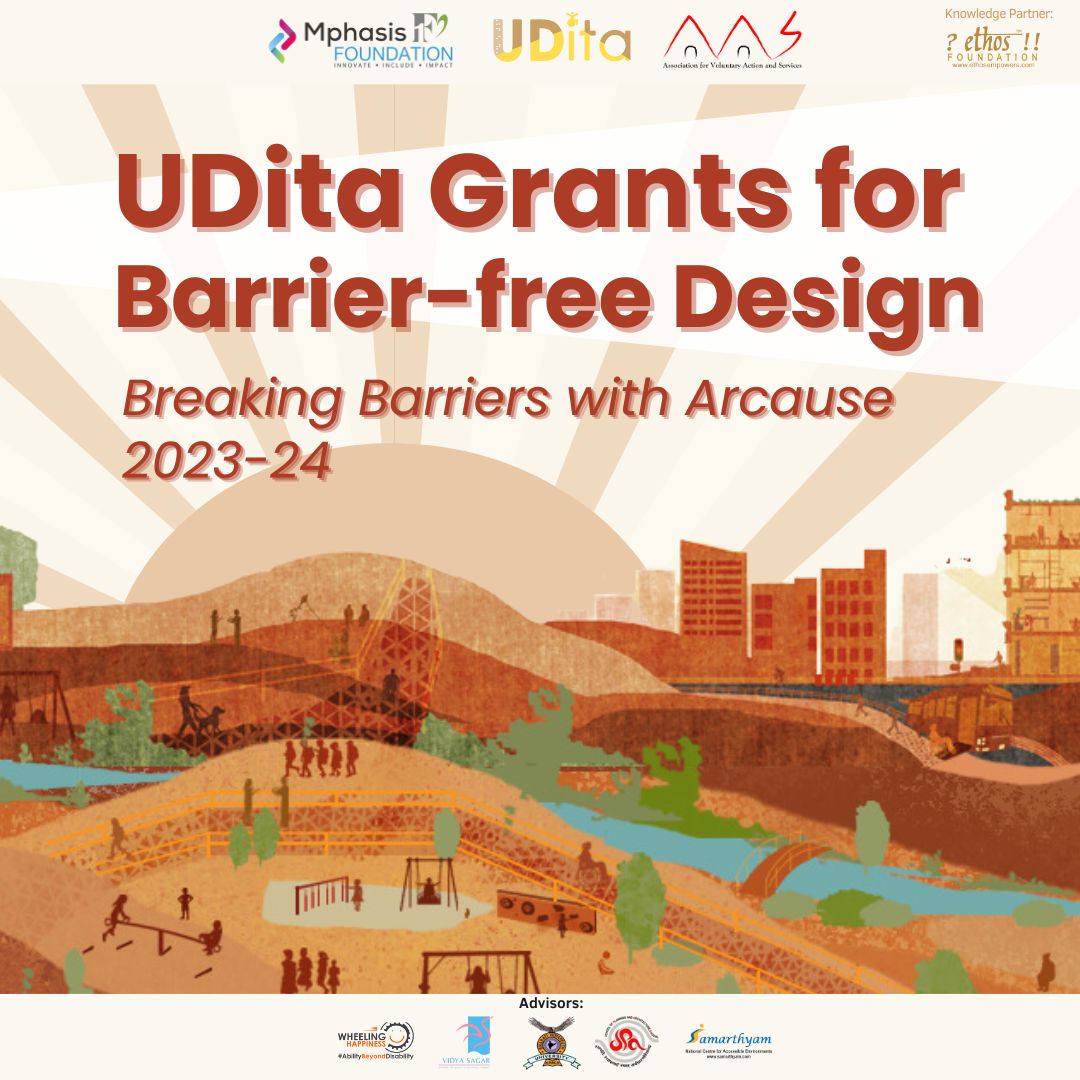
UDita Grants for Barrier Free Design
2023
Winners
Applications
The Grants Program under Project UDita, by Mphasis F1 Foundation and AVAS, with Ethos Foundation as the knowledge partner, offers Rs. 50,000/- to three visionary winners or teams to bring Universal Design concepts to life. This initiative encourages projects that break down barriers and foster inclusivity through tangible solutions. It challenges participants to address design issues in public and residential spaces, campuses, offices, and beyond, with ideas ranging from apps and products to small renovations and prototypes. The program aims to create a barrier-free India, while ensuring collaboration and permissions for real-world implementation.
Project Awareness
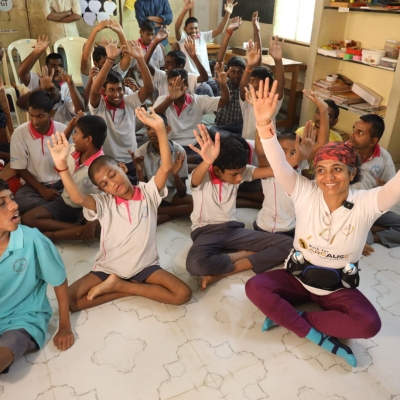
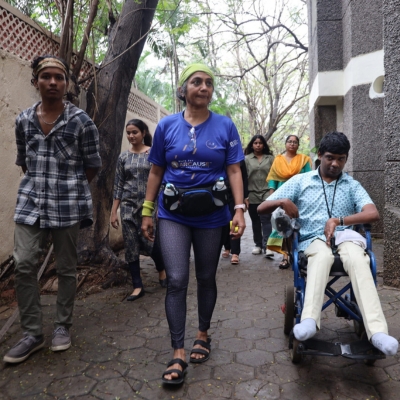
Ar.Gita Balakrishnan walked from Chennai to Bangalore covering around 335km for the cause of Inclusive design in 2023
Social Walkathon
2023
PWD
Students
Laypersons
Winners
Colleges
Teachers
Submissions
Walk for Arcause
2023
NGO
pwd
Students
Laypersons
Content for Laypersons
Flashcards
Youtube
Gallery
Our Partners
Supporting Partners
Advisors

Collaborators