Faculty Development
Workshops
Acedge Courses
Arcause Club
Volunteer
Electives – Chennai
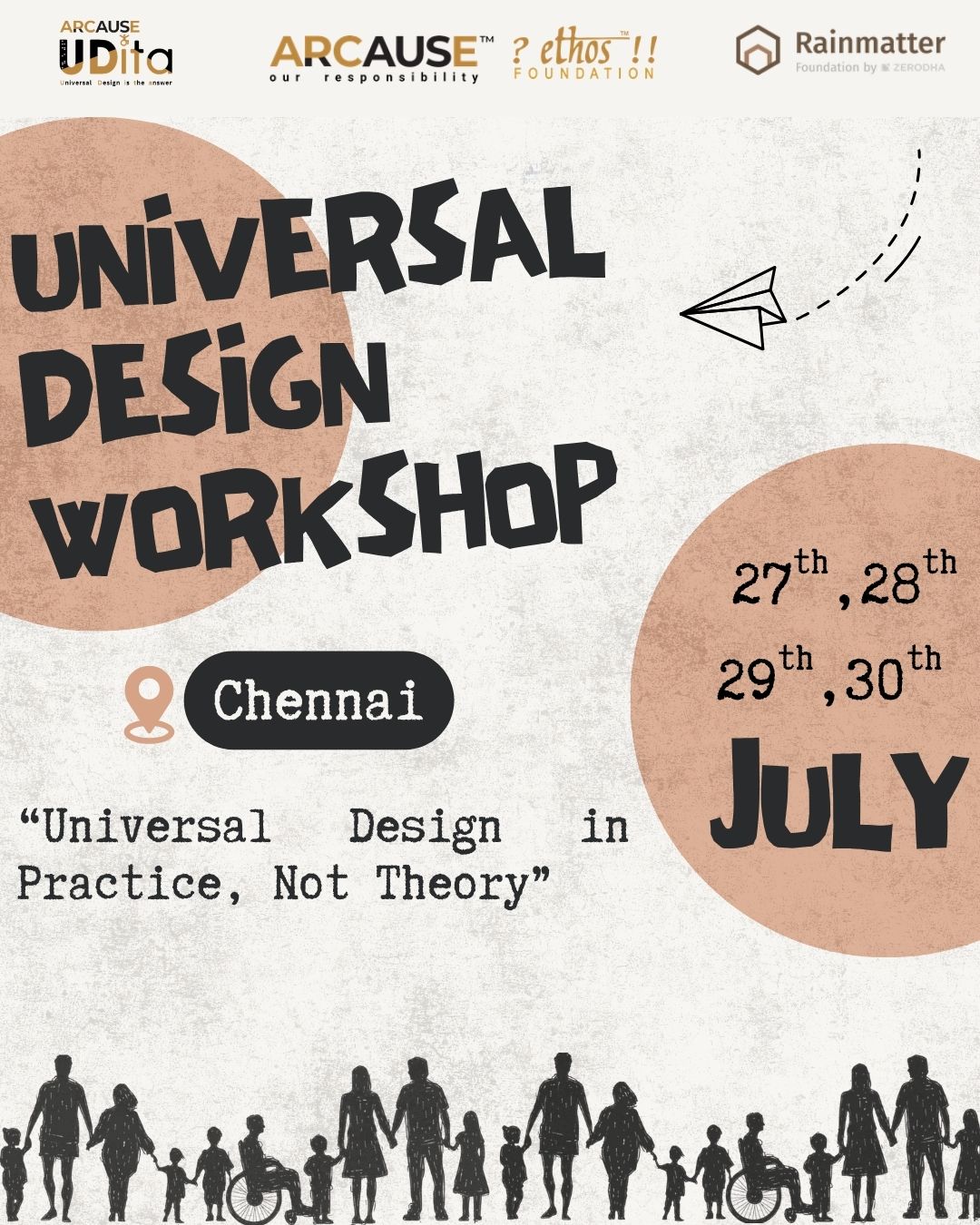
The workshop is envisioned as a practice-led learning module that exposes architecture students to Universal Design, Accessibility, and Inclusive Practice through direct engagement with experts, institutions, and lived realities. The elective balances sensitisation, skill-building and applied workshops, ensuring students move from awareness to action. The elective travels across colleges to expose students to multiple institutional cultures and to understand accessibility.
The Travelling Elective successfully completed its first chapter in Bengaluru in 2026.
Building on the insights and experiences gained there, the initiative now continues its journey to explore new cities, cultures, and learning opportunities through immersive, place-based education.
Participatory Feedback
What can a design process reveal when it looks beyond drawings, briefs and site boundaries?
What happens when architects engage not only with the people who commission or design a project, but also with those who live, work, move through, care for, maintain and make meaning within its context?
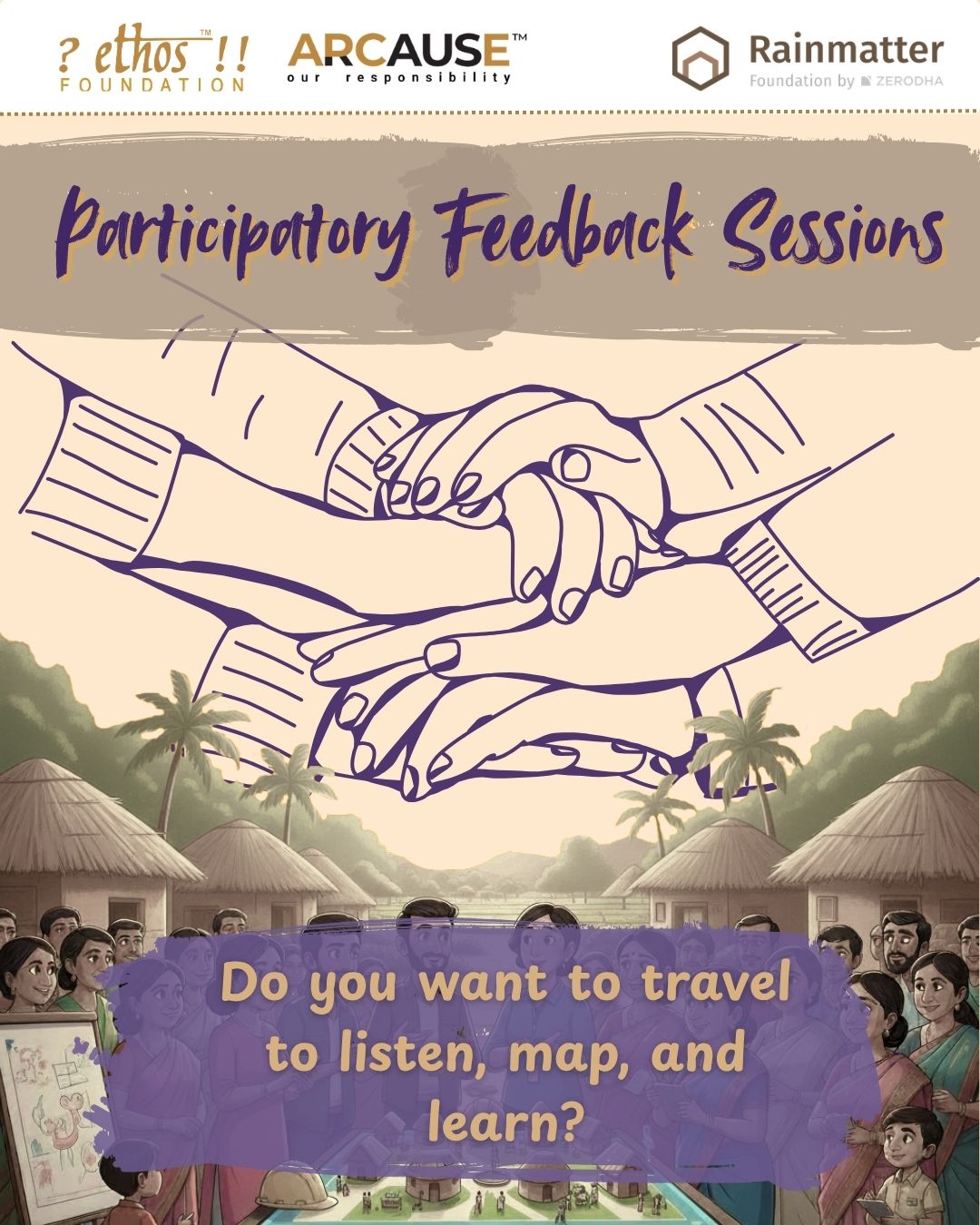
These questions shaped Ethos Foundation’s Participatory Design Feedback Sessions, conducted as part of our Mainstreaming Responsible Design initiative. Across five sessions in five different locations, we worked with architectural practices, communities, students, faculty, volunteers and allied stakeholders to explore how participation can become part of an ongoing design process rather than a consultation added after the major decisions have already been made.
The five sessions brought us into very different settings: a children’s home in Siruganur, a community centre in Kundalampatti, a social well-being centre in Anekal, an integrated plotted township in Hisar, and a proposed Glass Museum in Firozabad. The collaborating practices were HnP Architects, MAWI Design, Da India, Aura Architecture and Node Urban Lab.
The projects differed in scale, purpose, geography and stage of development. This was central to the exercise. We were not looking to apply one universal method across all five contexts. Instead, we wanted to understand how participatory processes could be shaped around the questions, people and conditions of each project.
The sessions were not designed to produce instant design solutions or establish a single model of participation. They were intended to create spaces for listening, observation, mapping, conversation and reflection, and to examine what these forms of engagement might add to architectural practice.
Arcause Immersion Support
At Arcause, we believe that the next generation of designers should not just imagine a better world—they should have the tools, experience, and access to build it. Arcause Immersion Support is a curated initiative designed to empower motivated students by providing a bridge between academic learning and the complexities of real-world design challenges.
The path from student to practitioner is often hindered by financial barriers and a lack of access to specialised, hands-on training. We are changing that. By offering fully funded seats for curated workshops across India, we ensure that talent and ambition—not financial means and accessibility —define a student’s trajectory.