
Inclusive Design, Accessibility and User Experience
IDEA × Ethos Foundation × Arcause Clubs
In September 2026, Ethos Foundation, in collaboration with the Inclusive Divyangjan Entrepreneur Association (IDEA), conducted two Arcause Clubs engagements in Delhi focused on accessibility, inclusive design and user experience.
The workshops at Jamia Millia Islamia on 24 September 2026 and Indira Gandhi Delhi Technical University for Women (IGDTUW) on 25 September 2026 brought students into direct engagement with questions around how people experience the built environment differently.
Students were encouraged to observe, question and experience their campuses through different user perspectives, examining how movement, navigation, communication, information and everyday interactions can enable or create barriers to participation.
From Accessibility Provisions to User Experience
For architecture and design students, accessibility is often encountered through standards, dimensions and technical requirements. These are important, but they do not by themselves explain whether a space is genuinely usable.
The workshops therefore centred on a broader question:
What happens when we evaluate a space not only by what it provides, but by how different people actually experience it?
Students engaged in IDEA’s Self-Assessment of the Campus, using an accessibility toolkit and methodology to observe selected areas of their respective campuses. Working in groups, they considered questions of independent movement, wayfinding, communication, safety, usability and participation.
The self-assessment was positioned as a learning exercise, encouraging students to recognise barriers that may otherwise remain unnoticed in familiar environments.
Experiencing Accessibility Through Access Dash
The workshops also featured Access Dash, IDEA’s experiential accessibility-awareness activity.
The activity encouraged students to engage with accessibility through participation and reflection, helping them recognise that barriers can extend well beyond physical infrastructure. Communication, information, navigation, services, social interactions and everyday assumptions can all influence how a person experiences a space.
The activity was followed by reflection, connecting what students experienced during Access Dash with what they had observed during the campus self-assessment.
Experience → Observe → Question → Reflect
This connection was central to the workshops: understanding accessibility not only as something to be studied, but as something that influences everyday experience.
UDita: Connecting Accessibility to Design Practice
Ar. Gita Balakrishnan, Founding Trustee of Ethos Foundation, brought the discussion into the context of UDita, Ethos Foundation’s work around Universal Design and inclusive environments at Jamia Millia Islamia on 24 September 2026
The conversation encouraged students to consider the role of designers in creating spaces that respond to a wider range of bodies, abilities and ways of experiencing the environment.
The focus was not simply on whether a space complies with a requirement, but on whether it supports independent use, safety, dignity and participation.
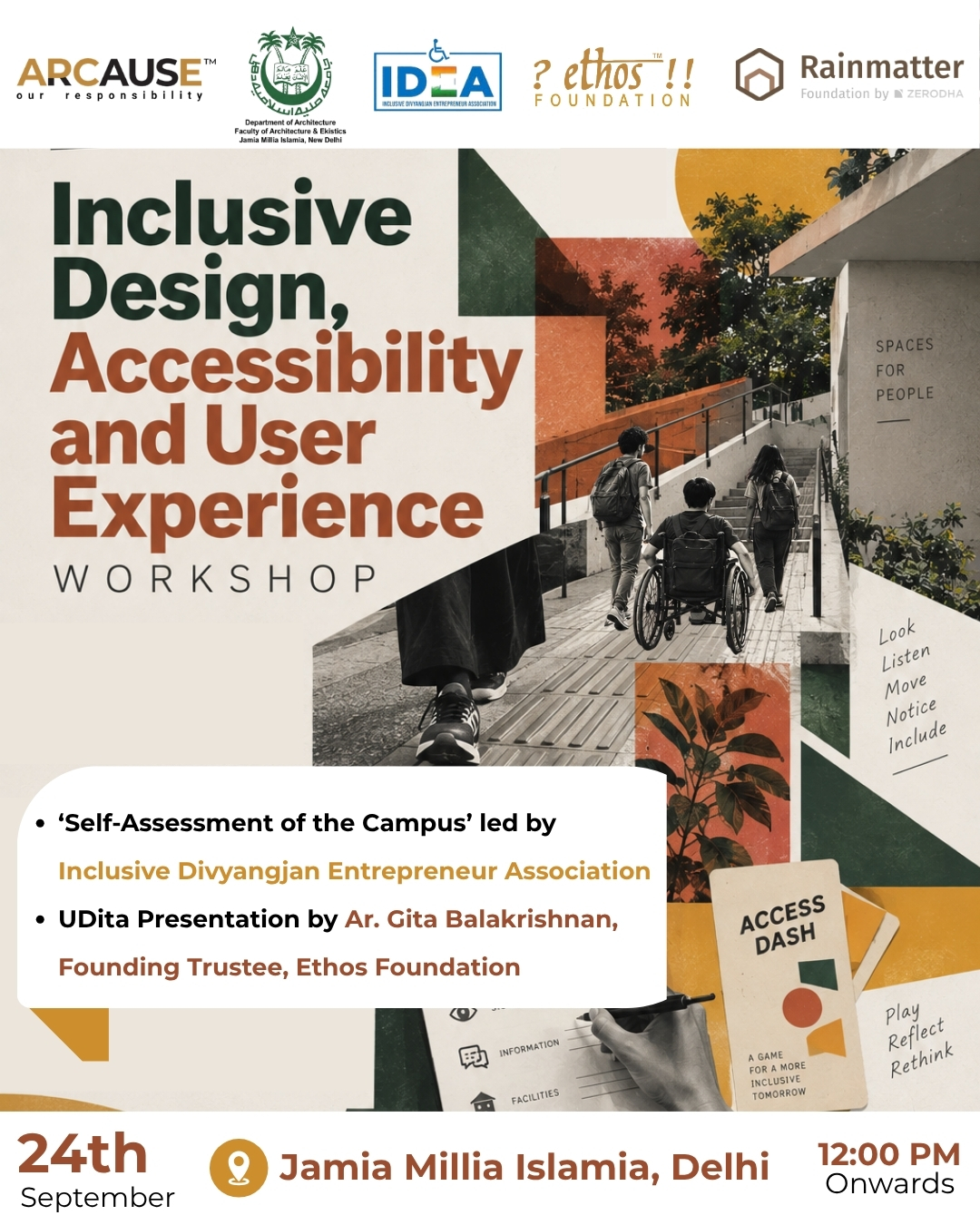
Jamia Millia Islamia | 24 September 2026
At Jamia Millia Islamia, students participated in the Self-Assessment of the Campus and Access Dash, working collectively to examine everyday campus environments and discuss the barriers and opportunities they identified.
The session brought together observation, experiential learning and discussion, encouraging students to reconsider spaces that they encounter every day through the perspectives of users with different abilities and needs.
Indira Gandhi Delhi Technical University for Women | 25 September 2026
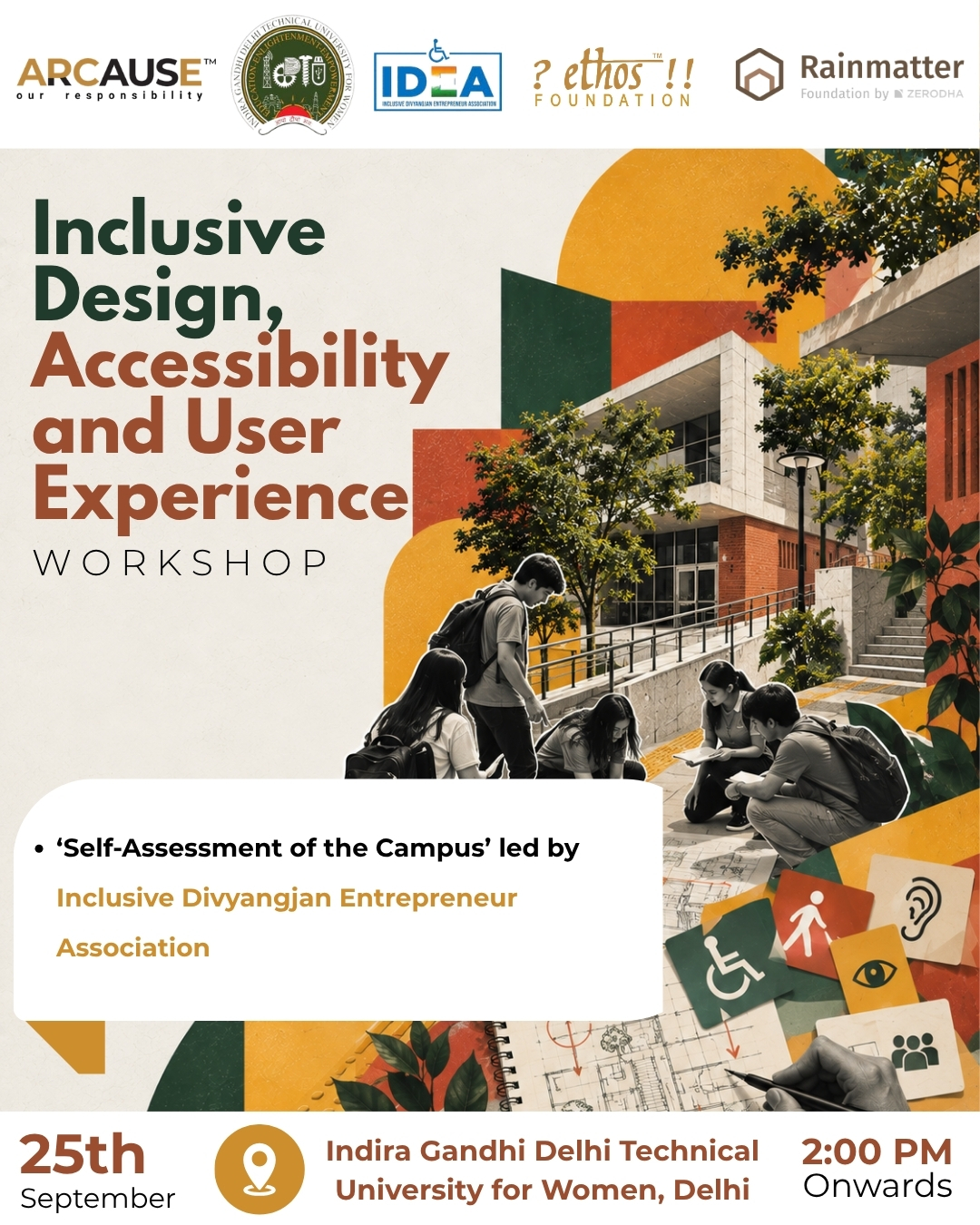
The second engagement was conducted at Indira Gandhi Delhi Technical University for Women (IGDTUW), continuing the same focus on accessibility, inclusive design and user experience.
Students engaged with IDEA’s self-assessment methodology and Access Dash, followed by reflection and discussion around how accessibility can be integrated more meaningfully into architectural and design education and future professional practice.
Reflection Note
The two workshops were part of a larger effort to create spaces within design education where accessibility can be explored through observation, lived experience and critical reflection.
For Ethos Foundation, the intent is to encourage students and future practitioners to ask better questions of the environments they design:
- Who is able to use this space?
- Who might experience it differently?
- What assumptions are embedded in the design?
- And what would it take to make participation more equitable?
Accessibility therefore becomes a part of the process of understanding people, place and user experience from the beginning.
In Collaboration With :
Ethos Foundation × IDEA × Jamia Millia Islamia × IGDTUW
Inclusive Design | Accessibility | Universal Design | User Experience