Post Event Note
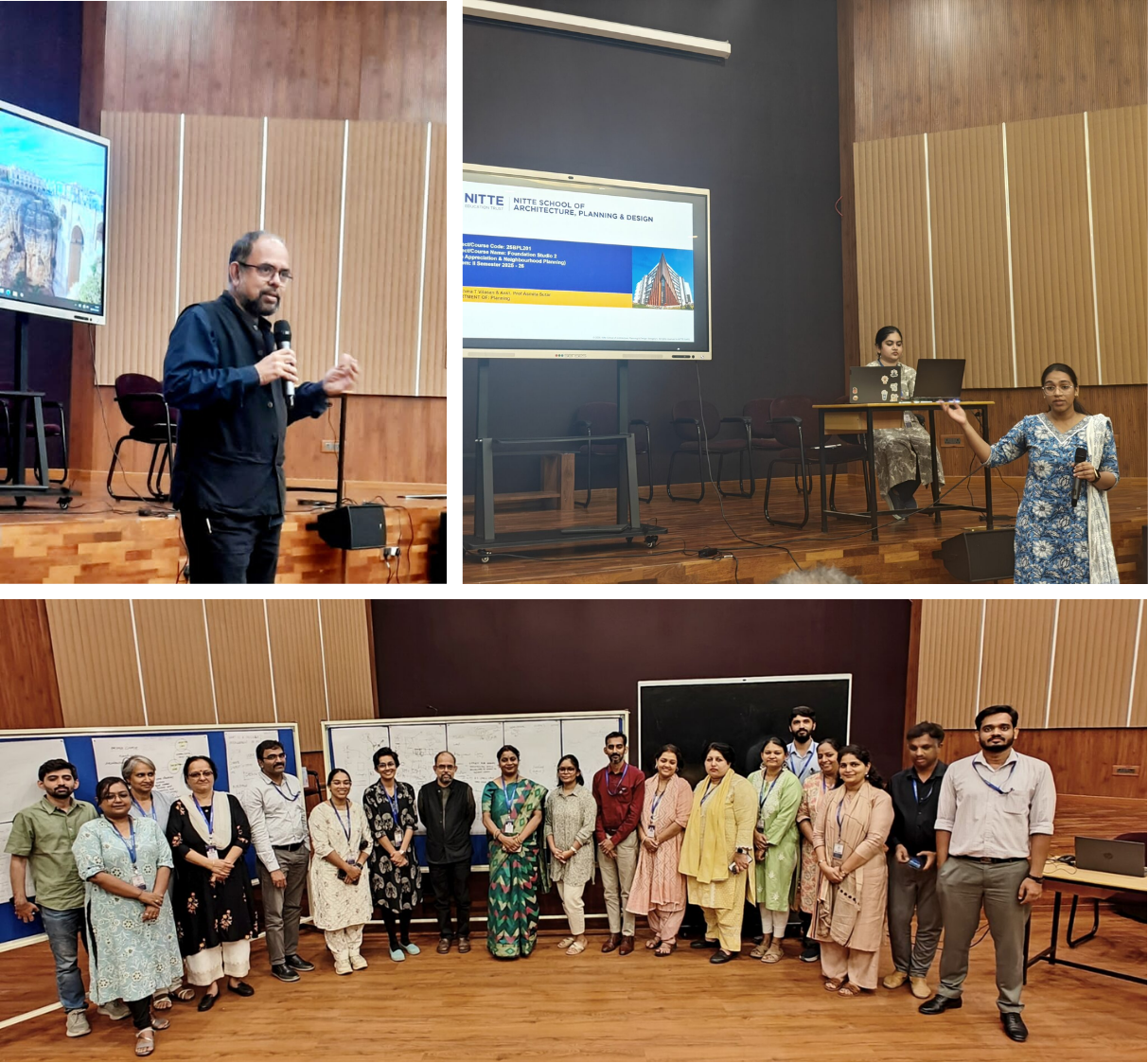
The “Spot Fix” Initiative, an action-oriented faculty empowerment program by Ethos | Arcause and hosted by Nitte School of Architecture Planning and Design (NSAPD), concluded as a resounding success, leaving participating educators deeply inspired and equipped with practical tools. Faculty members found the two-day workshop highly immersive, with Day 1’s cross-institutional discussions sparking a wealth of ideas and providing crucial insights into the pedagogical nuances of different regional colleges. The sessions were so engaging that several attendees requested future iterations to be extended over multiple days to allow for deeper knowledge transfer and synthesis. Day 2, exclusive to NSAPD faculty, proved exceptionally fruitful; under the guidance of Prof. Durganand Balsavar, educators tackled the complexities of open-ended syllabi, learning how to formulate integrated assignments and structured assessments. This cross-disciplinary integration not only aims to significantly reduce the academic load on students but also ensures that core course and program outcomes are effectively achieved. Ultimately, Prof. Balsavar’s vast experience and wisdom provided massive, actionable takeaways, empowering faculty to confidently dismantle traditional silos and implement a seamless, interconnected design curriculum.
Mentor
Durganand Balsavar
Day 1
Broad Integration & Cross-Institutional Knowledge Sharing
Date: 2nd July 2026
Who can attend: Open to all Architecture, Planning, and Design faculty from Bangalore and regional southern colleges.
Focus: Macro-level curriculum integration, cross-disciplinary tools, and an interactive regional Q&A session.
Day 2
Deep Dive
Date: 3rd July 2026
Who can attend: NSAPD Faculty only.
Focus: Internal studio mapping, localised curriculum frameworks, and institutional pathway synchronisation.
Venue & Logistics
- Venue: NSAPD Campus, Bangalore
- Registration Fee: Free (Prior registration is mandatory). Limited spots available.
*Please Note for Outstation Faculty: Complimentary accommodation is available on a twin-sharing basis strictly for the night of July 1st, 2026 only. Due to logistical limits, this benefit is restricted to the first 6 outstation faculty members on a first-come, first-served basis.